- info@aromantique.co.uk
- 07419 777 451


Heather Dawn Godfrey P.G.C.E., B.Sc. (Joint Hon)
(Author of Essential Oils to Ease Anxiety, Healing with Essential Oils, Essential Oils for the Whole Body, and Essential Oils for Mindfulness and Meditation)
Gifts of nature, the healing qualities of plants range from physical to ethereal; we are inextricably connected to earths’ web of life.
….you who are born of the mountains and the forests and the sea can find their prayer in your heart. Kahlil Gibran
We share biological affinity with plants; simple examples being gaseous exchange and provision of vital nutrients that maintain and support bodily function, growth, tissue repair, energy production, and more.
In deed, healing plants and their essential oils have been used throughout history for their protective, restorative, rehabilitative, and hedonistic qualities, attributes observed and documented in ancient scriptures and medicinal texts and, more recently, affirmed in scientific journals and numerous research papers. (Godfrey 2022, 2019, 2018)
How essential oils support health and wellbeing
Perfume and incense bring joy to the heart. Proverbs 27:9
Essential oils are aromatic volatile terpene and terpenoid compounds, which are typically extracted from plants (herbs and trees, heart wood, bark, blossoms and flowers, fruits, leaves, stalks, seeds, roots, gums, and resins), mainly by steam distillation, or in the case of citrus fruits, by expression.
The process of extraction increases the concentration of essential oils, thus, their potency too; just one or two drops of essential oil is sufficient to procure significant effect. Applied as an aromatherapy treatment, their molecules are absorbed either via skin (administered in an emollient, such as vegetable oil, cream, lotion or ointment), or the respiratory system through inhalation of their vaporised droplets (applied, for example, via room diffusers, perfumes, or drops on a tissue, steam inhalation, and ‘aromasticks’); inhalation has a direct influence on the limbic (olfactory connection to the brain and neural pathways) and circulatory systems (absorption via alveoli capillaries and thence the organ systems). Certain essential oils are prescribed and administered by professional herbalists, doctors or pharmacists as medicine (contained in gel-like digestible capsules). (Godfrey 2022, 2019, 2018).
Essential oils develop within the plant during the secondary phase of metabolism (along with alkaloids, flavonoids, bitters and gums), a process instigated by photosynthesis. While not vital to the plants’ existence, essential oils play a significant role. For example, they stave infection, attract pollinators, repel predators, disarm invasive microbes, repair damaged tissue, and control and optimise the ambient environment (temperature and humidity) by creating a haze or mist, an auric vapour, which surrounds the plant (terpenes evaporate at high temperature, and consequently produce air flows that cool the plant and reduce transpiration). They relay messages from one part of the plant to another (thus, they are considered to be ‘hormone-like’), and to other plants in the immediate vicinity. (Godfrey 2022).
Similarly, essential oil molecules modulate various processes within the body. Their properties range across a spectrum, from immune support (anti-bacterial, anti-viral and general immune functionality), tissue healing and regeneration, pain relieving, digestive, to psycho-somatic, restorative, revitalising, anti-anxiety, anti-depressant, uplifting, calming and grounding, and more. They are multi dynamic adaptogens (that is, they support the immune system and the body’s resilience to infection, disease and stress, and modulate circadian rhythms, in particular sleep-wake cycles, through their relaxant or stimulant actions; they stimulate the limbic system (the emotional brain) to modulate mood and emotion, and stimulate hormone balance via the limbic systems connection to the pituitary gland. (Godfrey 2022, 2019, 2018).
Olfactory and endocannabinoid receptors
Olfactory receptors and endocannabinoid receptors are found in close proximity scattered throughout the body in numerous organs and tissues (for example, the olfactory epithelium and the main olfactory bulb at the top of the nasal cavity, and the piriform cortex and other brain areas that process and code olfactory information, the central nervous system, vascular system, lungs, gastrointestinal tract, reproductive organs, liver, spleen, brain stem, bones and skin), and together play a role in a range of functions and processes, which include sleep modulation, mood, memory, learning, motor control, skin and nervous function, liver function, muscle formation and food intake, and interacts with the olfactory system to modulate processes such as odour sensitivity, olfactory learning and memory.
The mechanisms by which endocannabinoid and olfactory receptors interconnect and interact are complex and still not completely realised; indeed, olfaction is an intricate process.
Endocannabinoid production and receptor sites collectively form the ‘endocannabinoid system’.
The endocannabinoid system, and the difference between THC and CBD
The body has produced endocannabinoids, similar to delta-9-tetrahydrocannabinol (THC), the chemical found in the Cannabis sativa plant, for millions of years (apparently, pre-dating the first growth of the plant).
Endocannabinoids (anandamide and 2-arachidonoyl glycerol – AE and 2-AG) are stored in cells and are produced (on demand) in various body tissues, including within the brain, nervous system, muscle, fatty tissue and immune cells, and control many bodily functions through activation of endocannabinoid receptors, CB1 and CB2.
CB1 receptors are predominantly found inside neuron cells within the brain (especially the hypothalamus and pituitary gland), and central nervous system, and mediate many of the psychoactive effects of cannabinoids. They are also found in peripheral tissues, such as adipocytes (fat cells), immune cells, skeletal muscle, exocrine pancreas, liver, and gastrointestinal tract.
CB2 receptors are mostly found outside immune cells, and inside some neurons (there are more CB1 receptors in the central nervous system than CB2 receptors), and are present in the spleen, thymus, pancreas, and peripheral immune cells, including mast cells and peripheral blood leukocytes, and have an anti-inflammatory effect (for example, CB2 receptors aid modulation of intestinal inflammation, contraction, and pain in inflammatory bowel conditions).
As well as delta-9-tetrahydrocannabinol (THC), the primary psychoactive compound in cannabis responsible for most of the psychotropic and euphoric effects associated with hemp (or marijuana), Cannabis sativa also contains a compound called cannabidiol (CBD) – which is the non-psychoactive component of cannabis. Cannabidiol does not activate CB1 receptors in the brain, thus, is not psychoactive, neither does it activate CB2 receptors. Instead, cannabidiol interacts with the endocannabinoid system independently and indirectly. Cannabidiols’ mode of action prevents and slows down the breakdown of endocannabinoids, which consequently extends, and thus increases, the availability and the duration of their action. Indeed, cannabidiols’ influence a range of actions, from molecular, cellular, to organ – anti-inflammatory, antioxidant, cell survival, pain reduction, and can improve or positively influence physiological conditions, such as cardiovascular disease, neurological and nervous disorders and, apparently, even cancer, and also modify psycho-emotional conditions, such as anxiety, agitation and depression.
The first endocannabinoid discovered was named anandamide after the Sanskrit word Ananda, meaning ‘bliss’.
Essential oils, due to their high terpene and terpenoid content, modulate the endocannabinoid system.
Hemp (Cannabis sativa) Essential Oil
Hemp (Cannabis sativa) essential oil contains around 0.005% THC and less than 0.5% CBD, and mainly comprises of mono- and sesquiterpenes, such as, myrcene (which supports the immune system, eases neurological conditions, and promotes relaxation), caryophyllene (which activates cannabidiol receptors, which modulate immune cell function, pain relief and inflammation), ocimene (which has anti-inflammatory, antioxidant and anti-tumour properties), pinene (which modulates pain relief and inflammation, promotes relaxation, aids memory, mental alertness and clarity, respiratory function, and supports the immune system), and limonene (which modulates the immune system and inflammation, eases bronchial conditions, and is anti-tumour).
Hemp essential oils scent profile is similar to that of the Cannabis sativa plant/herb, and includes notes that are herbaceous, grassy, rooty, earthy, tobacco, nutty, soft, spearmint, and citrus.
Hemp Seed Oil
Hemp seed oil (although having similar properties, not to be confused with hemp seed essential oil, which must be dilute in a base medium before applying to skin) is a viscous vegetable oil, rich in linoleic and linolenic acid (polyunsaturated fatty acid triglycerides), terpinoids and cannabinoids, cold pressed from hemp seeds. Hemp seed oil demonstrates significant skin healing properties. For example, phytol (a diterpene alcohol), found in hemp seed oil, exhibits anti-inflammatory activity; linolenic and linoleic acid (fatty acid triglycerides) contribute to its antioxidant properties; and, tetrahydrocannabinol and cannabidiol contribute to its anti-inflammatory, analgesic, antioxidant, and antimicrobial properties, qualities that quell inflammation, prevent infection, promote tissue regeneration and accelerate wound healing.
(Simankowicz and Stepniewska 2025; Rahman 2025; Naya et al 2023; Nagarkatti and Nagarkatti 2023; Seo et al 2022; Grinspoon 2021; Johnson et al 2020; Gulluni et al 2018; Sheperd and Pluznick 2015; Mackie 2008).
Fig 1. Terpenes found in Hemp (Cannabis), CBD oil, and Essential Oils
beta-myrcene – (monoterpene) supports the immune system (anti-oxidant, anti-infectious), eases neurological conditions (such as dystonia, epilepsy and Parkinson’s disease), eases anxiety and depression and promotes relaxation (also found in Rosemary, Juniper Berry, Frankincense sacra, Lemongrass, and Yarrow).
Odour type – spicy. Odour strength – high. Scent: peppery, terpenic, spicy, balsamic, plastic.
beta-caryophyllene – (sesquiterpene) activates CB2 (Cannabidiol) receptors which modulate immune cell function, pain relief and inflammation, eases anxiety and depression and promotes relaxation (also found in Black Pepper, Clove Bud, Melisa (Lemon Balm), and Ylang Ylang).
Odour type- spicy. Odour strength – medium. Scent – sweet, woody, spicy, clove, dry.
alpha- and beta-pinene – (monoterpene) modulates pain relief and inflammation, promotes relaxation, aids memory, mental alertness and clarity, and respiratory function, and supports the immune system (anti-oxidant and anti-infectious) (also found in Frankincense sacra, Cypress, Helichrysum (Immortelle), Juniper berry, Myrtle, Nutmeg, Pine, and Rosemary).
Alpha-pinene: Odour type – herbal. Odour strength – high. Scent – fresh, camphoraceous, sweet, pine, earthy, woody.
Beta-pinene: Odour type – terpenic. Odour strength – high. Scent – sweet, fresh, pine, woody, hay, green.
limonene – (monoterpene) modulates the immune system, modulates inflammation, anti-tumour, eases bronchial conditions and soothes allergies, eases anxiety and depression and promotes relaxation (also found in Bergamot, Caraway, Grapefruit, Black Pepper, Bitter Orange, Lemon, Mandarin, and Palo Santo).
Dextro-limonene: Odour type – citrus. Odour strength – medium. Scent – citrus, orange, fresh, sweet.
Laevo-limonene: Odour type – terpenic. Odour strength – medium. Scent – terpenic, pine, herbal, peppery.
eucalyptol (1,8-cineole) – (monoterpene oxide) modulates inflammation and cytokine activity, supports the immune system (anti-oxidant, anti-infectious), eases chronic respiratory conditions and other chronic diseases (also found in Eucalyptus, Cajeput, Caraway, Ginger, Hyssop officinalis, Spike Lavender, Myrtle, Niaouli, Rosemary, Spanish Sage, and Tea Tree).
Odour type – herbal. Odour strength – high. Scent – eucalyptus, herbal, camphoraceous, medicinal.
linalool – (alcohol) modulates pain relief and inflammation, supports the immune system (anti-infectious), protects the nervous system, eases anxiety and depression (also found in Basil linalool, Clary Sage, Coriander, Hyssop linalool, Lavender, Marjoram linalool, Neroli, Petitgrain, Thyme linalool, Ho Wood, and Ylang Ylang).
Odour type – floral. Odour strength – medium. Scent – citrus, floral, sweet, bois de rose, woody, green, blueberry.
(See my book Healing with Essential Oils to discover more about the chemical constituents found in essential oils.)
The olfactory system and scent detection
Be like the flower, turn your face to the sun. Kahlil Gibran
Scent molecules (terpenes and terpenoids) are detected (like a key in a lock) by olfactory receptors located at the top of each nasal cavity that, in turn, relay nerve impulses to the Limbic System located in the brain. As previously observed, odour receptors are also located in other areas of the body, such as the skin and other organs (heart, liver, lungs, kidneys and gastrointestinal tract). However, by grand design, it seems, proximity of the master olfactory portal in the roof of the nasal cavity ensures immediate awareness and instinctive reflexive responses.
The Limbic System incorporates various functional structures located in the central paleomammalian area of the brain (which include the amygdala, hippocampus and hypothalamus) that are responsible for basic physiological and emotional responses to sensory stimulation. The hypothalamus functionally connects the Limbic System to the frontal lobe (where the brain rationalises and makes sense of information and sensory input) and to the pituitary gland. The pituitary gland, also known as the master endocrine gland, initiates hormone release in response to sensory signals, activating either the sympathetic or parasympathetic nervous system, depending on the nature of the stimuli; the sympathetic nervous system prepares the body for ‘fight or flight’ (protection), and the parasympathetic nervous system maintains a state of peace and relaxation (rest and digest), and disengages the sympathetic nervous system post ‘alert’, returning the body to its optimal functional resting state.
When inhaled, some essential oil molecules will cross the blood brain barrier (especially sesquiterpenes, which are found, for example, in frankincense, carrot seed, cedarwood, German chamomile, ginger, helichrysm, myrrh, black pepper, patchouli, spikenard, and ylang ylang) where they interact with various receptor sites, such as, GABA and glutamate receptors, located in the hippocampus, thalamus, basal ganglia, hypothalamus, and brainstem (GABA is an amino acid that functions to reduce neuronal excitability by inhibiting nerve transmission).
The mechanisms by which essential molecules are absorbed and interact within the body are very complex and, although modern technology affords much insight, are still not fully realised. However, our body is clearly ‘wired’ to receive phyto-molecules; verified by the presence of numerous (olfactory and endocannabinoid) receptor sites scattered throughout the body and the multilateral physical and psychosomatic responses instigated by detection.
(Godfrey 2022, 2019, 2018)
Healing with Essential Oils
Rose (Rosa centifolia/damascena) provides a lovely example of how diverse the action of essential oils can be. The qualities of rose range from hedonistic, aphrodisiac, anti-depressant, hypnotic, and anti-convulsive, to anti-oxidant, anti-inflammatory, analgesic, antitussive (relieves coughs), antibacterial, and bronchodilatory.
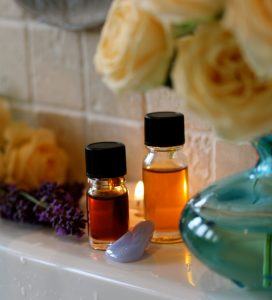 Some of the molecules found in rose oil are barely detectable yet these synergistically contribute significantly to its scent and therapeutic properties (synergy is not unique to rose oil as most essential oils demonstrate synergistic interaction between some or all of their constituents).
To illustrate, citronellol and geraniol, are predominant components found in rose essential oil, both of which exude floral, sweet, rose-like scents, yet the perfume of the complete essential oil is acknowledged as rich, intense, sweet, powerful beeswax-like, highly floral, rosy, with waxy, floral, spicy, green, metallic, body notes, then tenacious warm floral spicy dry out notes.
Floral, sweet, rose-like scents are also observed amongst constituent ‘notes’ in other essential oils that contain citronellol (for example geranium and citronella), and geraniol (for example, bergamot, palmarosa, thyme, and geranium). Each molecule comprising an essential oil contributes a unique ‘tone’ that combines with other molecules in various arrangements to create specific ‘tunes’ or ‘melodies’.
(Godfrey 2022)
That which we call a rose, by any other name would smell as sweet. Shakespeare, Romeo and Juliette
Lavender (Lavandula angustifolia) provides another illustration. Linalool and linalyl acetate are two predominant compounds found in this essential oil, collectively making up to 90% of lavenders chemical constituents.
The scent profile of linalool is described as citrus, floral, sweet, woody and green, and linalyl acteate, is described as sweet, green, floral and spicy, with a clean woody, terpy, citrus nuance.
Linalool is sedative, analgesic and anti-inflammatory, and also features in large quantity in other essential oils, such as, ho wood, rosewood, thyme (CT. linalool), marjoram (CT. linalool), and basil (CT. linalool).
Linalyl acetate is anti-inflammatory, sedative, relaxant and anti-hypertensive, and is present in high amount in Clary sage, petitgrain, rose, mints and bergamot FCF essential oils.
Lavender angustifolia’s overall therapeutic profile is, including those qualities mentioned above, anti-depressant, anti-microbial, antiseptic, anti-spasmodic, anti-toxic, anti-viral, bactericidal, cleansing, deodorant, hypotensive, skin healing and toning.
Spike Lavender (Lavandula latifolia), on the other hand, contains linalool and, in place of linalyl acetate, 1,8-Cineole (Eucalyptol) and a lesser amount of Camphor. 1,8-Cineole is expectorant, anti-inflammatory, antispasmodic and improves cerebral blood flow; its scent is ‘eucalyptus-like’. Camphor instigates vasodilation (dilates blood vessels and decreases blood pressure); its scent is fresh and warm. The overall scent profile of Spike Lavender thus differs from Lavender angustifolia and is accordingly described as eucalyptus, herbal, camphor, and medicinal.
These examples demonstrate how intricate and complex essential oils are. Each essential oil comprises a unique array of chemical constituents, the presence and quantity of which synergistically determine and distinguish that oils scent dynamic and therapeutic properties and qualities.
As previously established, essential oils are generally physically protective and restorative and psycho-emotionally vitalising, warming, grounding and calming. Their actions complement and gently support at one and the same time physical, mental and spiritual states.
In deed, the perception of scent instantly instigates a reflexive response within the brain that may inspire mood and emotion, compound and/or trigger memories, and conjure images – a blossoming garden in summer, woody earthy forests in spring, sweet citrus orchards in autumn, – or simply but significantly, instil feelings of peace and calm, of feeling bright and awake, and more.
The sensual experience of scent detection also draws attention to the moment, thus essential oils are wonderful companions for meditation, prayer and for moments when we simply want to centre our attention in the here and now. Thus, they are ideal companions to call upon when dealing with stress and stress related issues, including mild depression, anxiety, feelings of loss and grief, or to journey with through change and transition, or simply to compound and celebrate wellness, wellbeing, a sense of contentment, and joyful events.
The sense of smell is very personal; what one person finds pleasant another person may dislike or feel indifferent toward. Using our own nose, however, we are usually able to detect which scent is good for us at a given moment.
The essential oils listed below are among those most frequently cited as being anti-depressant and anti-anxiety, uplifting and calming. These oils may also alleviate stress related conditions, such as, insomnia, headaches, and skin disorders (eczema, psoriasis and so on), and more.
Essential oils to harmonise mood and emotion
Bergamot, Cedarwood, Chamomile Roman, Citronella, Clary sage
Corriander, Frankincense, Geranium Rose, Grapefruit, Lavender
Lemon balm (Melissa), Lemongrass, Marjoram, Neroli, Orange
Patchouli, Peppermint, Petitgrain, Rose, Rosemary
Sandalwood, Spikenard, Vetivert, Ylang Ylang
Applying essential oils
Remember, do not apply essential oils neat to your skin, but add one or two drops to an emollient, and do not take essential oils internally unless administered, prescribed and monitored by a professional healthcare practitioner.
Vaporising a few drops of essential oils in a room diffuser, or inhaling one or two drops on a tissue or from a nasal inhaler, or applied as a personal perfume infused in vegetable oil ( applied via massage or roller bottle) or cream, are all fun, safe and very effective ways to dispense essential oils in order to experience their scents and benefit from their physical and psycho-emotional gifts.
Self-massage is also a lovely way to apply essential oils (essential oil molecules penetrate the epidermis and find their way into the circulatory system). For example, add three to six drops of essential oil to a vegetable oil or non-perfumed lotion, and then apply, using a rhythmic motion (stroking or circular movements) to face, arms, hands, legs and feet – ideally after a bath or before bed.
Go to your fields and your gardens, and you shall learn that it is the pleasure of the bee to gather honey of the flower, but it is also the pleasure of the flower to yield its honey to the bee. For to the bee a flower is a fountain of life, and to the flower a bee is a messenger of love, and to both, bee and flower, the giving and the receiving of pleasure is a need and an ecstasy. Kahlil Gribran
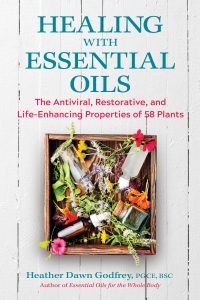
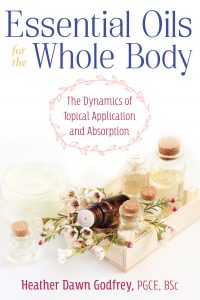
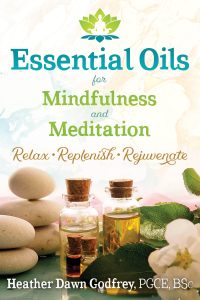
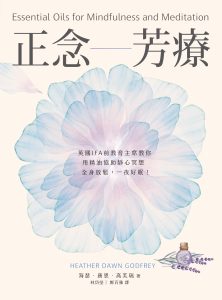
You will find valuable insight, practical details and reference information about the various qualities of these and numerous other essential oils in my book Healing with Essential Oils, and my other books Essential Oils to Ease Anxiety, Essential Oils for the Whole Body and Essential Oils for Mindfulness and Meditation (published by Inner Traditions, Vermont USA and available to purchase from most high street or online book suppliers).

References
Agatonovic-Kustrin, S., Kustrin, E., Morton, D. W. (2019) Essential oils and functional herbs for healthy aging. National Library of Medicine. PubMed. Neural Regen Res. 14(3): 441-445. https://pubmed.ncbi.nlm.nih.gov/30539810/
Ali, B., Al-Wabel, N. A., Shams, S., Ahamad, A., Khan, A. A., Anwar, F. (2015) Essential oils used in aromatherapy: A systematic review. Asian Pacific Journal of Tropical Biomedicine, Elsevier volume 5 issue 8 p 601-616. https://cyberleninka.org/article/n/3650/viewer
Charmine, I. PhD, Oken, B. MD, PhD (2016) Aroma Effects on Physiologic and Cognitive Function Following Acute Stress: A Mechanism Investigation. Journal of Alternative and Complementary Medicine. 1; 22(9): 713-721. https://pubmed.ncbi.nlm.nih.gov/27355279/
Clarke, S. (2002) Essential Chemistry for Safe Aromatherapy. Churchill Livingstone. Harcourt Publishers, London
de Sousa, D. P. (2017) Essential Oils and Their Constituents: An Alternative Source for Novel Antidepressants. Molecules, 20(8): 1290. https://www.ncbi.nlm.nih.gov/pmc/articles/PMC6152054/
do Vale T.G., Furtado E.C., Santos Jr J. G., Viana G.S.B. (2002) Central effects of citral myrcene and limonene, constituents of essential oil chemotypes from Lippia alba (Mill.) n.e. Brown. NIH National Library of Medicine 9(8):709-14. https://pubmed.ncbi.nlm.nih.gov/12587690/
Ebrahimi, H., Mardani, M., Basirinezhed, M. H., Hamidzadeh, A. Eskandari, F. (2021) The effects of Lavender and Chamomile essential oil inhalation aromatherapy on depression, anxiety and stress in older community dwelling people: A randomized Controlled trail. Explore (NY). S1550-8307 (21)00001-X. https://pubmed.ncbi.nlm.nih.gov/33454232/
Emer, A. A., Donatello, N. N., Batisti, A. P., Belmonte, L. A. O., Santos, A. R. S., Martins, D. F. (2018) The role of the endocannabinoid system in the antihyperalgesic effect of Cedrus atlantica essential oils inhalation in a mouse model of postoperative pain. Journal of Ethnopharmacology, Elsevier, vol 210 p 477- 484 https://pubmed.ncbi.nlm.nih.gov/28917977/
Fung, T. K. H.; Lau, B. W. M.; Ngai, S. P. C.; Tsang, H. W. T. (2021) Therapeutic Effect and Mechanisms of Essential Oils in Mood Disorders: Interaction between the Nervous and Respiratory Systems. International Journal of Molecular Science 22(9): 4844
Gibran, K . (1980) The Prophet, Wlliam Heinmann, Pan Books. ISBN 0-330-26220-3
Godfrey, H. D. (2022) Healing with Essential Oils. Healing Arts Press, Rochester, Vermont USA
Godfrey, H. D. (2019) Essential Oils for the Whole Body. Healing Arts Press, Rochester, Vermont USA
Godfrey, H. D. (2018) Essential Oils for Mindfulness and Meditation. Healing Arts Press, Rochester, Vermont USA
Grinspoon, Peter. The endocannabinoid system: Essential and mysterious. Staying Healthy, Harvard Health Publishing. https://www.health.harvard.edu/blog/the-endocannabinoid-system-essential-and-mysterious-202108112569 (2021)
Gupta, A., Coogler, G. (sourced June 2021) Traditional plants that engage the endocannabinoid system and their medicinal potential. Canna Foundation (Scientific studies and cannabis testing. https://www.fundacion-canna.es/en/traditional-plants-engage-endocannabinoid-system-and-their-medicinal-potential
Gulluni, Nadia; Tania Re; Idalba Loicono; Giovanni Lanzo; Luigi Gori; Claudio Macchi; Francesco Epifani; Nicola Bragazzi; Fabio Firenzuoli. Cannabis Essential Oil: A Preliminary Study for the Evaluation of the Brain Effects. Evidence Based Complementary and Alternative Medicine. https://pmc.ncbi.nlm.nih.gov/articles/PMC5822802/ (2018)
Han, X., Gibson, J., Eggett, D. L., Parker, T. L. (2017) Bergamot (Citrus bergamia) Essential Oil Inhalation Improves Positive Feelings in the Waiting Room of a Mental Health Treatment Centre: A Pilot Study. DOI: 10.1002/ptr.5806. 31(5): 812-816. https://pubmed.ncbi.nlm.nih.gov/28337799/
Herz, R. (2016) The Role of Odour Evoked Memory in Psychological and Physiological Health. Brain Science vol 6(3). https://www.ncbi.nlm.nih.gov/pmc/articles/PMC5039451/
Hogratanaworakit, T (2009) The Relaxing effect of rose oil on humans. National Library of Medicine. PubMed. Nat Prod Commun. PMID: 19370942. 4(2):291- 6. https://pubmed.ncbi.nlm.nih.gov/19370942/
Johnson, S. A., Rodriguez, D., Allred, K. (2020) A Systematic Review of Essential Oils and the Endocannabinoid System: A Connection Worthy of Further Exploration. Hindawi Journals. Evidence-Based Complementary and Alternative Medicine.. Article ID 8035301. https://www.hindawi.com/journals/ecam/2020/8035301/
Lillehei, A. S., Halcon, L. L. (2013) A systematic review of the effect of inhaled essential oils on sleep. Journal of Alternative and Complementary Medicine. DOI: 10.1089/acm.2013.0311. 20(6): 441-51. https://pubmed.ncbi.nlm.nih.gov/24720812/
Lizarraga-Valderrama, L. (2021) Effects of essential oils on central nervous system: Focus on mental health. Phytotherapy Research. DOI: 10.1002/ptr.6854. 35(2): 657-679. https://onlinelibrary.wiley.com/doi/full/10.1002/ptr.6854
Mackie, Ken. Cannabiniod receptors: Where They are and What They do. Journal of Neuroendocrinology 1365-2826. https://onlinelibrary.wiley.com/doi/10.1111/j.1365-2826.2008.01671.x (2008)
Maleki, N. A., Maleki, S. A., Bekhradi, R. (2013) Suppressive Effects of Rosa Damascena Essential Oil on Naloxone-Precipitated Morphine Withdrawal Signs in Male Mice. Iran Journal of Pharmaceutical Research. PMCID: PMC3813277. https://pubmed.ncbi.nlm.nih.gov/24250642/
Nagarkatti, Prakash and Nagarkatti, Mitzi. Endocannabinoids: What are they? University of South Carolina: https://sc.edu/uofsc/posts/2023/02/conversation_marijuana.php (2023)
Naya, Nadia Marinez; Kelly, Jazmin; Corna, Giuliana; Golino, Michele; Abbate, Antonio; Toldo, Stefano. Molecular and Cellular Mechanisms of Action of Cannabidiol. Molecules 28(16):5980. https://pmc.ncbi.nlm.nih.gov/articles/PMC10458707/ (2023)
Olofsson, J. K., Ekstrom, I., Lindstrom, J., Syrjanen, E., Stigsdotter-Neely, A., Nyberg, L, Jonnson, Sara, Larsson, M. (2020) Smell-Based Memory Training: Evidence of Olfactory Learning and Transfer to the Visual Domain. Chemical Senses, Oxford Academic volume 45 issue 7 p 593-600. https://academic.oup.com/chemse/article/45/7/593/5869423
Peana, A. T., D’Aquila, P. S., Panin, F., Serra, G., Pippia, P., Moretti, M. D. L. (2002) Anti-Inflammatory activity of linalool and linalyl acetate constituents of essential oils. Phytomedicine. National Library of Medicine. PubMed 9(8): 721-6. https://pubmed.ncbi.nlm.nih.gov/12587692/
Pereira I., Severino P., Santos A.C., Silva A.M., Souto E.B. (2018) Linalool bioactive properties and potential applicability in drug delivery systems. Colloids and Surfaces B Biointerfaces 171:566-578. NIH National Library of Medicine https://pubmed.ncbi.nlm.nih.gov/30098535/
Rahman, Safrizal; Mohammad A. Ravai; Dasrul Dasrul; Onarisa Ayu. Effect of hemp seed oil on accelerating wound healing: Evaluation of wound size reduction, epithelialization, granulation tissue formation, and vascularization in murine models. Narra Journal. https://pmc.ncbi.nlm.nih.gov/articles/PMC12059866/ (2025)
Salehi B., Upadhyay S., Orhan I.E. Jugran A.K., Jayaweera S.L.D., Dias D.A., Sharopov F., Taheri Y., Martins N., Baghalpour N., Cho W.C. Sharifi-Rad J. (2019) Therapeutic Potential of a- and B-Pinene: A Miracle Gift of Nature. Biomolecules NIH National Library of Medicine 9(11): 738 https://www.ncbi.nlm.nih.gov/pmc/articles/PMC6920849/
Sanchez-Vidana, D. I., Ngai, S., P-C, Chow, J. K-W Chow, Lau, B. W-M, Tsoan, H. W-H (2017) The Effectivess of Aromatherapy for Depressive Symptoms: A Systematic Review. Evidence Based Complementary and Alternative Medicine. 5869315. https://www.hindawi.com/journals/ecam/2017/5869315/
Seo, Jinyoung; Choi, Subin; Kim, Hyeyoun; Park, See-Hyoung; Lee, Jongsung. Association between Olfactory Receptors and Skin Physiology. Annal of Dermatology 34(2):87-94. https://pmc.ncbi.nlm.nih.gov/articles/PMC8989906/ (2022)
Setzer, W. N. (2009) Essential Oils and anxiolytic aromatherapy. Sage Publications, Journal of Natural Product Communications vol 4 no 9 p 1305- 1316.
Sheperd, Blythe D.; Pluznick, Jennifer, L. How does your kidney smell? Emerging roles for olfactory receptors in renal function. Pediatric Nephrology 31(5):715-723. https://pmc.ncbi.nlm.nih.gov/articles/PMC4752438/ (2015)
Simankowicz, Pauline; Stepniewska, Joanna. The Role of Endocannabinoids in Physiological Processes and Disease pathology: A Comprehensive Review. Journal of Clinical Medicine 14(8):2851. https://pubmed.ncbi.nlm.nih.gov/40283681/ (2025)
Soel G.H., Kim K.Y. (2016) Eucalyptol and its role in chronic diseases. Advances in Experimental Medicine and Biology. NIH National Library of Medicine 929:389-398 https://pubmed.ncbi.nlm.nih.gov/27771935/
Terral, G., Marsicano, G., Grandes, P., Soria-Gomez, E. (2020) Cannabinoid Control of Olfactory Processes: The where it matters. PMC7230191. Genes (Basal) 11(4): 431. https://www.ncbi.nlm.nih.gov/pmc/articles/PMC7230191/
The Good Scents Company (accessed July 2021) http://www.thegoodscentscompany.com/data/rw1007872.html
Tisserand, R., Young, R. (2014) Essential Oil Safety 2nd ed. Churchill Livingstone, Elsevier, London
Turcotte C., Blanchet M-R, Laviolette M., Flamand N. (2016) The CB2 receptor and its role as a regulator of inflammation. Springer Cellular and Molecular Life Sciences 73(23): 4449-4470 https://www.ncbi.nlm.nih.gov/pmc/articles/PMC5075023/
Yu L., Yan J., Sun Z. (2017) D-limonene exhibits anti-inflammatory and antioxidant properties in an ulcerative colitis rat model via regulation of iNOS, COX-2, PGE2 and ERK signalling pathways. Molecular Medicine Reports. Spandidos Publications 6241 p 2339-2346 https://www.spandidos-publications.com/mmr/15/4/2339