- info@aromantique.co.uk
- 07419 777 451



The stillest point of a seesaw is at its pivoting centre.
Meditation is the act of returning consciousness to the stillness at the centre of being.
Meditation techniques are vessels of focus and attention: like the cup that draws water from the depths of the well; water, in this sense, is the quenching conscious experience of being in the moment.
Techniques that are applied to bring awareness to the moment, to draw attention to ‘here and now’, to ‘presentness’, include applying focus on the rhythm of breathing, listening to a sound, focusing on a visual object, even, the scent of a flower or perfume.
Life unfolds one moment at time; the past is memory, the future, imagination – ‘now’ is paradoxically borderless, seamless, full and complete, still yet harmonic, both seed and fruit, rich with abundance, contentment, possibility and potential.

Parables and metaphors, images, symbols, music and art in its many forms, are employed to express and convey a tangible sense of the intangible.
Earth, a garden. Plants, with their chemical constituents and essential oils, are gifts from the garden that express physical, practical, sensual, and also ethereal properties and qualities which support our health and wellbeing – nutrients and minerals that sustain metabolism, growth and physical function, chemicals that influence the body to repair, restore and rebuild tissues and stave infection, perfumes that attract, repel, protect and aid propagation and survival (all of this, while also being euphoric and transcendent). Edible plants provide food and medicine, thus are nourishing and healing. Plant chemicals complement and support the chemistry within our body. Earth and all of its creatures, plants and animals, including micro-organisms, fungi and insects, breathe together and share a symbiotic and mutualistic relationship with each other – the complex, intricate, interactive web of life.
Plants as medicine
Not all plants are safe to consume; while some plants are nourishing, others are toxic and fatally poisonous to us. Yet, in minuscule amounts, certain toxic substances found within these otherwise poisonous plants (for example, wolfsbane, wormwood, horse chestnut, buttercup, deadly nightshade, hemlock, broom, foxglove, autumn mandrake) can be medicinal and/or even psychotropic. For example, when consumed or applied in controlled amounts, there is evidence these plants provide properties that may reduce pain, remove toxins and positively stimulate organ function, and, in some instances, induce altered states of perception and consciousness (in a way that apparently supports mental health and spiritual ‘insight’). Historically and presently these plants are usually prescribed, with appropriate caution, by an experienced physician, medicine man or woman, or Shaman.
Plants and their derivatives are, thus, generally categorised according to their actions; for example, nourishing, healing/medicinal, poisonous, euphoric and psychoactive.
Plants historically employed for their healing or medicinal properties, for example, include, among many others, aniseed, dill, fennel, frankincense, ginger, peppermint and other herbs, rose, and sandalwood. Healing actions in this context includes soothing digestive aliments, improving and supporting organ function, circulation, skin conditions and wound healing.
Euphoric inducing plants, for example, include (from strong to mild, and used in moderate dose), cannabis (hemp), coca, kava, poppy seed, sage (Salvia divinorum), benzoin, clary sage, frankincense, nutmeg, and thyme linalool, among others.
Psychoactive inducing plants and fungi include, for example, belladonna, deadly nightshade, henbane, mandrake, and fly agaric mushrooms, and high doses of cannabis, coca, kava, poppy seed, nutmeg, sage (Salvia divinorum), and valerian, among others.
You will notice common essential oil-bearing plants among these; for example, benzoin, clary sage, frankincense, nutmeg, rose, sandalwood, thyme linalool, and valerian. It is important to remember, however, that when removed, that is separated, from the plant, the chemical composition of an essential oil will change. Essential oils comprise of volatile terpenes and terpenoid derivatives. The process of extraction, which may involve heat (distillation), solvent extraction, or maceration, can alter the chemical mixture, either leaving behind complementary, non-distillable compounds or compounds that do not easily dissolve or vaporise, non-volatile compounds, while destroying or altering the chemical construct of others.
For example, at high temperature, the chemical matricin degrades to form a new molecule; the blue-green coloured chamazulene, which is not present within the plant (chamazulene is found in German Chamomile, Blue Tansy, Yarrow and Wormwood essential oil). CO2 extracted German Chamomile, however, is non-coloured; the boiling point achieved using this method is considerably reduced, therefore, chamazulene is not created. (See my book, Healing with Essential Oils, for detailed explanation of this process).
Placing the high concentration of essential oils into perspective:
2,500 to 4,000 kg (5,511 to 8,818 pounds) of rose petals yields 1 kg (2.2 pounds) of essential oil.
1.4 kg (3lbs) of fresh lavender yields 15ml (or approximately 300 drops) of lavender essential oil.
One drop of essential oil is equivalent to 15-40 cups of medicinal tea, or up to 10 teaspoons of tincture (Krumbeck 2014). One drop of peppermint essential oil, for example, is equivalent to 26 cups of peppermint tea.
By comparison, the quantity of essential oil present in individual plants is minute; thus, the amount of essential oil consumed when eating herbs or making herb tea is very small; also, (as explained above) other non-distillable components that act to counter balance the irritant or toxic qualities of essential oils are present in the whole plant, but not always in the extracted essential oil.
A ten-millilitre bottle of essential oil, therefore, is highly concentrated, very potent, and is consequently potentially prone to be irritating and sensitising, so is generally applied differently to the plant or herb from which the essential is derived.
NB: Essential oils are prescribed for internal ingestion by a medically trained healthcare professional, pharmacist, or herbalist (and this is the only context in which oral or rectal ingestion of essential oils should be administered), and are always interfused with a fixed vegetable oil and suspended in plant-based (hypromellose) or gelatin (collagen from animal skin or bones) capsules (the former being preferable for vegetarians), and are only administered following a thorough consultation ‘work up’; thus, dose is ideally controlled, safe, and appropriate. (See below for essential oils not safe to apply in aromatherapy)
So, an essential oil comprises of a concentrated mixture of volatile organic, mainly terpene and terpenoid compounds, and, once extracted from the plant, is rendered an entity unto itself.
According to Tisserand and Young (2014), there are virtually no psychoactive essential oils. Nutmeg essential oil, for example, even when consumed orally in high dose, is not psychoactive. However, this essential oil does procure a euphoric effect when consumed in high quantity, with potential unpleasant side effects, such as, headaches, feelings of nausea and a sense of ‘distance’ and unreality. Clary sage is another example of a euphoric essential oil; this oil may be unpleasantly potentiated when mixed with alcohol.
Historical application of essential oils, plants and resins
As established previously, herbs and other essential oil-bearing plants, roots, trees, and fungi, have been applied medicinally throughout history; in the form of skin healing and antiseptic ointments and balms, environmental sanitisers, as antimicrobials to stave infections and disease, as digestive calmatives, as fumigants, scents and perfumes, and for their psycho-emotional-spiritual calming, uplifting, grounding, invigorating, psychotropic and euphoric qualities.
Historically, essential oils were mainly extracted by steeping or soaking plant material in water, animal fat or oil (such as olive oil).
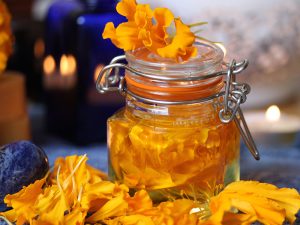
When plant material is macerated in boiling water* to create teas, tinctures and tonics, or when it is soaked in animal fat, vegetable oil, or cooled or warm distilled water, the volatile essential oils (along with other volatile and non-volatile phytochemical compounds, for example, flavonoids, chlorophyll, and carotene) are coaxed from their cells and cavities through osmosis, or through breakdown of oil-containing cell walls, or simply by being flushed or washed out of cavities. Macerated oils, therefore, due to the presence of flavonoids and chlorophyll, are often richly coloured (orange, yellow, red, green); examples of such oils include arnica, carrot, and marigold (calendula).
*Essential oil molecules are destroyed or altered by extreme heat.
Mary Magdalene famously anointed Jesus’s feet with perfumed oil of spikenard (or nard) that was likely obtained by steeping the crushed roots of this plant in warm olive oil (spikenard oil was imported from Asia- mainly India) – this oil was highly prized by the wealthy.
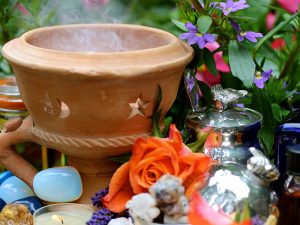
Incense derived from resins, such as frankincense, myrrh, galbanum, and from woods and bark, such as cedarwood, sandalwood, cinnamon and cassia, were, and still are, employed in social and religious ceremonies, rites of passage, and rituals.
Dried herbs, among them sage, rosemary, and thyme, were and still are ‘smoked’ or ‘smudged’ into the atmosphere to fumigate, stave the spread of disease, and dispel negative ‘spirits’ (or energies).
Indeed, there are numerous references made in historical scriptures and medicinal canons citing the use of essences of woods, resins, herbs, and spices for their hedonistic, medicinal, and spiritual qualities to aid meditation and prayer, relaxation and a sense of feeling grounded and uplifted, to promote a sense of peace, tranquillity and spiritual connection, and more. The Bible provides examples of these, some of which are listed below.
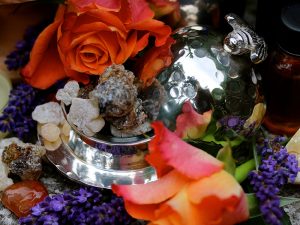 Dried resinous exudes of:
Balm of Gilead – a balsam tree, or shrub found historically in Jordon (the original biblical origin is uncertain, however, contenders include Mastic, Terebinth, Pine, among others). This resin produces a rare perfume, and a medicine that is applied to reduce inflammation, soothe the skin, protect the immune system, eliminate pain, speed healing, soothe the stomach, and detoxify the body.
Frankincense (Boswellia) – a small tree, or shrub found historically in Oman, Yemen and the Horn of Africa, including Somalia and Ethiopia. The resin (which oozes from the bark of this tree) regulates and calms breathing, and supports meditation and inner tranquillity.
Myrrh (Comiphora) – a small thorny tree, or shrub found historically in North Africa and the Middle East. Myrrh is very difficult to grow. The resin from this tree is calming and revitalizing, regulates and calms breathing, supports meditation, and warms emotional coldness.
Benzoin styrax – a large shrub or small tree found historically found in Sumatra, Indonesia. This dried white resin eases nervous tension, is sedative and warming.
Galbanum – a hollow stemmed plant found historically in Iran (Persia). This white resin, which dries, turning yellow or brown in colour, is balancing, being both sedative and stimulant, is calming and eases anxiety, depression and low mood, is restorative to the nervous system, and is uplifting.
Labdanum (Cistus) – is a raw resin obtained from boiling leaves and twigs (historically collected from goats beards and sheeps wool – the resin attached to fir during grazing from the cistus shrubs) is harvested from small Cistus creticus and species of rockrose shrubs found historically in Mediterranean regions. This resin aids meditation, grounds mood and emotion and encourages a feeling of being centred.
Roots of:
Calamus (Sweet Flag) – a tall wetland flowering plant historically found in India, Asia, Southern Russia, and Central Europe (growing at edges of ponds, small lakes, rivers, marshes, swamps and wetlands) . The roots of this plant were used historically as an anointing oil, but also, stimulates and improves brain function, alleviates feelings of fear, and is bracing and grounding.
Spikenard (Nard) – this flowering plant belongs to the valerian family and was historically found growing in woods in Nepal (Himalayas), China, and India – oil extracted from the roots was obtained a luxury in ancient Egypt, Western Asia and Turkey. These roots balance the sympathetic nervous system with the parasympathetic nervous system (acts as a tonic to the sympathetic nervous system, and regulates the parasympathetic nervous system); calms restlessness, eases anxiety, grounds mood and emotion, and inspires a sense of peace and spirituality.
Bark of:
Cassia – an evergreen tree found historically in China, but cultivated in India and other southern and eastern Asian countries. Infused as a tea, oil or balm; antiseptic; as incense, uplifting and calming.
Cinnamon – is an evergreen ‘thick-barked’ tree historically found in India, Sri Lanka, Bangladesh, and Myanmar – highly prized by the ancients, and imported to Egypt over 2,000 years ago. Infused as a tea, oil or balm, antiseptic; as incense, uplifting and calming.
Also, the needles, leaves, roots, wood and bark of:
Cedarwood – a coniferous tree historically found in the northern and western mountains of the Middle East and known as Cedar of Lebanon. Species are diverse, ranging across various botanical families, including Pinaceae, Cupressaceae, and Meliaceae. As incense, aids meditation, calming, instils feeling of peace and sense of connection.
and, the heart-wood (sawdust and chippings) of:
Sandalwood (possible cross reference with aloewood, oud, oodh, and agar – oud is a wood-like dark and fragrant resinous substance produced by the agar tree in reaction to parasitic mold infestation). A small heavy tropical tree historically found in South-east Asia, now cultivated in Northern Australia, India, China, Sri Lanka, Indonesia, Malaysia and the Philippines. As incense, aids meditation, calms and harmonises the mind (racing thoughts and mental ‘clutter’)
Santalum album is endangered due to over harvesting. It takes years before the tree produces the essential oil. Santalum spicatum is grown and cultivated in Australia and is now the preferred Sandalwood of ecological choice.
also
Hyssop – an herbaceous, woody-stemmed, semi-evergreen floral shrub found growing in southern Europe, the Middle East and Asia, applied to cleanse and purify, especially before or during prayer or ceremonial purifying rituals, “Purge me with hyssop, and I shall be clean; wash me, and I shall be whiter than snow”. Psalm 51:7
Modern use and application of essential oils
Traditional and herbal medicines are still applied today in many parts of the developing world. However, in our modern industrial environment, essential oils are mainly (95%) produced and consumed by the food, flavour, perfume, cosmetic, and pharmaceutical industry.
Apparently, the top-ranking essential oils used by these industries include, by highest quantity (between 12,000 and 1,300 tonnes):
Sweet orange, Mentha arvensis (Corn mint), Peppermint, Cedarwood, Lemon, Eucalyptus, Litsea cubeba (May chang), Clove leaf, Spearmint.
Five percent or so of essential oils produced are applied in the context of complementary or integrative medicine – to support the immune system, stave infection, aid digestion, heal wounds and ease skin conditions, to uplift and ground mood and emotion, ease depression and anxiety, agitation and restlessness, to aid concentration, improve memory, to ease stress and stress-related conditions, and to aid focus, concentration, relaxation, and meditation.
It is important to remember that not all essential oils are safe to use in aromatherapy. Essential oils not safe to use in aromatherapy include: Armoire (common or white wormwood), wormwood, wintergreen, wormseed, mugwort, among others (See my book, Essential Oils for the Whole body, Chapter Three, Safe Practice: Boundaries of Use and Safe Application).

How do essential oils work as companions of meditation and as aids to reduce stress?
According to Kim et al 2016 systematic review of published research on the Influence of Fragrances on Human Psychophysiological Activity:
Inhalation of fragrances has significant effect on brain function due to the ability of fragrance compounds to cross the blood-brain barrier and interact with receptors in the central nervous system; olfactory stimulation of fragrances produces immediate changes in physiological parameters such as blood pressure, muscle tension, pupil dilation, skin temperature, pulse rate and brain activity.
Concluding, they confirm that fragrances directly and/or indirectly affect the psychological and physiological conditions of humans; fragrances significantly modulate the activities of different brain waves and are responsible for various states of the brain (EEG testing); a number of studies scientifically support the beneficial use of various aromatic plants.
In another study exploring the effect of mindfulness meditation and the psycho-emotional influence of essential oils, Garcia et al (Soto-Vásquez & Alvarado-García 2017) found that, in combination, meditation and essential oils act synergistically to significantly reduce levels of anxiety.
The essential oils applied in this study (Satureja brevicalyx and Satureja boliviana – plants native to Peru) contain a high content of linalool, a phyto-chemical attributed with being ‘uplifting’, among other qualities, which the authors suggest attributed to the outcome.
The authors conclude that other essential oils containing linalool may potentially produce a similar effect and suggest, as an example, a blend of Ho wood, geranium and peppermint (peppermint does not contain linalool but in combination these oils create a similar chemical ‘fingerprint’ to the Peruvian oils).
Basil (linalool CT), lavender, neroli and petitgrain also contain high levels of linalool.
Other oils and resins that may support meditation include frankincense, myrrh, patchouli, peppermint, rose, rosemary, spikenard and vetivert.
For example, Frankincense and patchouli slow and deepen breathing, and instil a sense of peace. Lavender and geranium balance and calm emotion. Rosemary aids memory and concentration. Peppermint clears the sinuses, eases breathing and aids concentration. Vetivert is ‘grounding’.
Odour detection draws the perceivers’ awareness to their breathing, to the moment.
“Perfume and incense bring joy to the heart”. Proverbs 27:9
Qualities of essential oils that support meditation and ease feelings of stress include:
As a very general guide, when applying the qualities of essential oils:
Conclusion
The qualities of essential oils are numerous. Significantly, when considering meditation, their scents draw the perceivers consciousness into the present moment. They influence mood and aid concentration. They protect, restore, and revitalise body, mind and soul. Gifts of nature, essential oils, herbs, spices, woods and scented plants, blossoms and flowers, are vital companions on our journey through life and time.
You will find details about the numerous qualities, properties and applications of essential oils in my books, which re available from most high-street and online book outlets:
Essential Oils to Ease Anxiety: The Alchemist’s Guide to Serenity
Healing with Essential Oils: The Antiviral, Restorative, and Life-Enhancing Properties of 58 Plants
Essential Oils for the Whole Body: The Dynamics of Topical Application
Essential Oils for Mindfulness and Meditation: Relax. Replenish. Rejuvenate.